
Business Modeling - bmo502 - 2.1

Content organized by Claudia Samartin, in 2021, based on the book Reinvent your Business Model: How to Seize the White Space for Transformative Growth, published in 2018 by Harvard Business Review Press.
Value Proposition CANVAS –Tasks, Pains and Gains
As mentioned in the previous unit, the Value Proposition Canvas consists of two blocks: Value Proposition and Customer Segment. The purpose of this tool is to help design them within a simple and visual framework.
The purpose of the Value Proposition CANVAS is to help you design a value proposition that fits with the needs of customers and the so-called jobs-to-be- done (work to be done or customer tasks) that helps them solve their problems. This is what Lean Startup calls market-product fit or problem-solution fit.

Source: Osterwalder, A. Value Proposition Design: Como Construir Propostas de Valor Inovadoras, Ed. Alta Books,2019
Get a better look at customers by designing their profile. You need to look at three things to do this. Start by describing what your customers are trying to do.
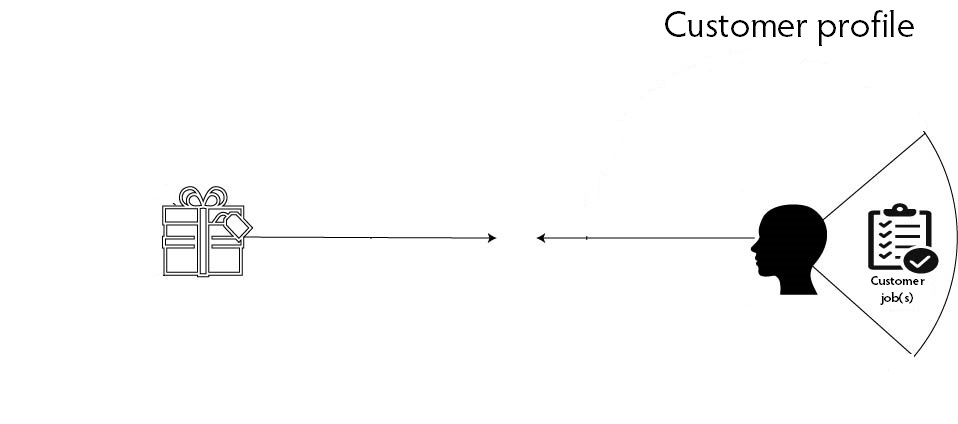
Source: Osterwalder, A. Value Proposition Design: Como Construir Propostas de Valor Inovadoras, Ed. Alta Books, 2019
You can delve deeper into this information by seeking answers to the following questions:
Describe the negative emotions, costs and unwanted situations, risks and other bad experiences that your customer may experience before, during or after the tasks listed above.
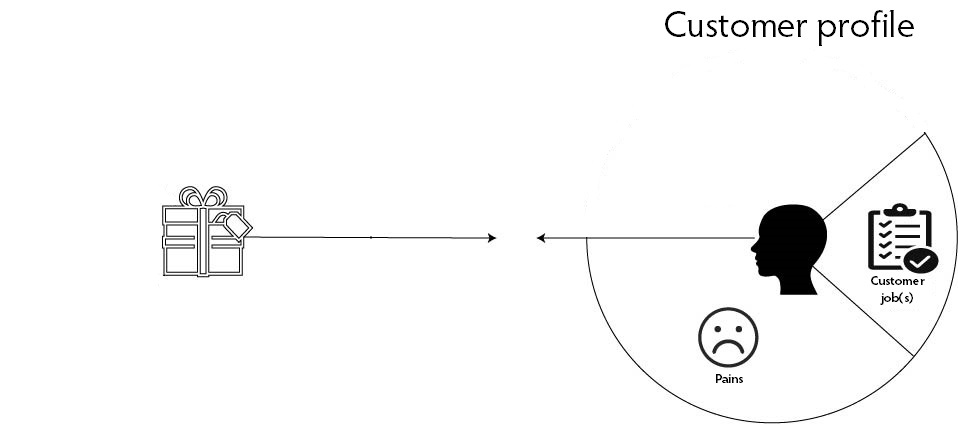
Source: Osterwalder, A. Value Proposition Design: Como Construir Propostas de Valor Inovadoras, Ed. Alta Books, 2019
Questions you need to ask to complete this step:
Now describe the benefits that your customers expect, want or would be positively surprised if it existed. This includes functional utility, social gains, positive emotions, and cost savings.
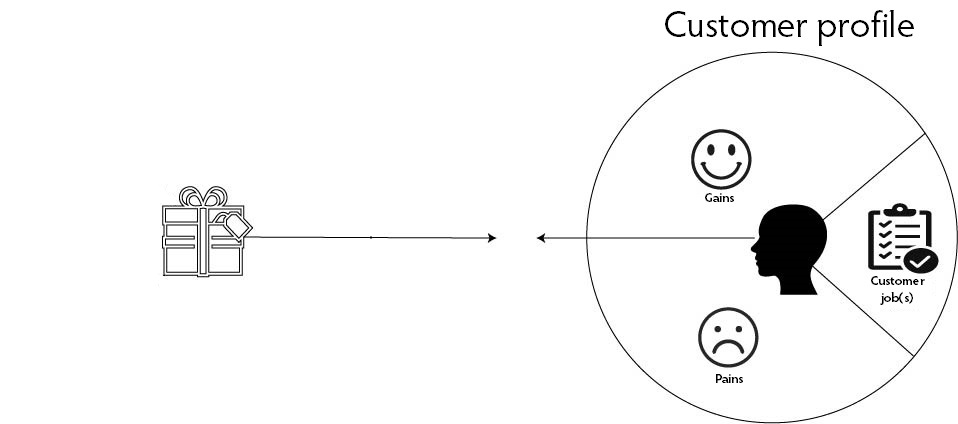
Source: Osterwalder, A. Value Proposition Design: Como Construir Propostas de Valor Inovadoras, Ed. Alta Books, 2019
Questions you need to ask to complete this step:
“Value Proposition Design CANVAS”
In this video Alex Osterwalder explains in an objective and quick way each of the blocks of the Value Proposition CANVAS.
Available at: https://youtu.be/D254suPMpwY
“Building the Value Proposition by Alex Osterwalder”
In this video, creating the Value Proposition CANVAS addresses in greater detail the concept of Value Proposition, insertingand explaining the elements for its creation.
Available at: https://youtu.be/b_X18bmpHaw
Bibliographical References
OSTERWALDER, A. Value Proposition Design: Como Construir Propostas de Valor Inovadoras, Ed. Alta Books, 2019
RIES, E. A startup enxuta, 1 ed., Ed. Leya, 2012
DER PIJL, LOKITZ e SOLOMON, Design a better business, Ed. Wiley, 2016

Business Modeling - bmo502 - 2.1
Value Proposition CANVAS –Tasks, Pains and Gains


REFERENCE BOOK:
Reinvent your Business Model: How to Seize the White Space for Transformative Growth
Mark. W. Johnson
Harvard Business Review Press, 2018


MUST University®: licensed by Florida Commission for Independent Education, License: 5593.